
July 2016
- Alexa Pichet Binette presented a poster at the AAIC Alzheimer’s Imaging Consortium.
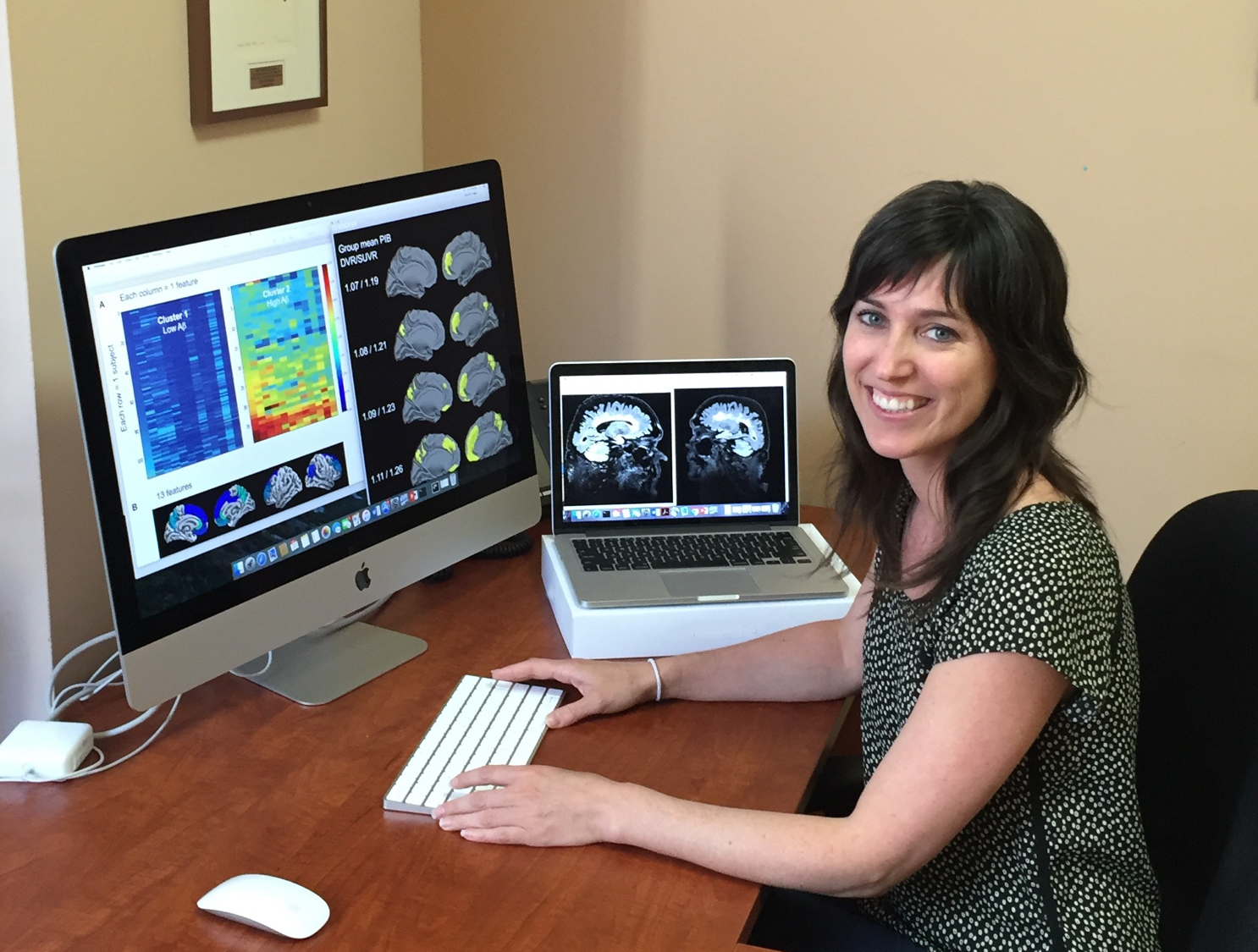
- Jacob Vogel gave a talk at the AAIC Alzheimer’s Imaging Consortium.
- Dr. Villeneuve received a project grant from the Canadian Institutes of Health Research.
The project aims to establish a better understanding of the impact of vascular health on Alzheimer’s disease pathology and clinical expression.
Principal Investigator: Villeneuve, Sylvia C
Co-Investigators: Breitner, John C; Evans, Alan C; Gauthier, Serge G; Hoge, Richard D; Poirier, Judes; Rosa-Neto, PedroRead Abstract
Abstract:
Alzheimer’s disease is the most common form of dementia, affecting nearly 50% of Canadians over 80 years of age. With the aging of the population, the prevalence of dementia is expected to increase dramatically, generating major social and economic costs. Currently, Alzheimer’s disease has no known cure, and by the time a person meets the clinical diagnosis for Alzheimer’s disease, brain and cognitive changes related to the disease are already probably irreversible. It is therefore essential to find ways to delay, slow down, or even prevent this devastating disease. Amyloid and tau are the pathological hallmarks of the disease. Vascular risk factors (i.e. hypertension, dyslipidemia and diabetes) are well known risk factors for Alzheimer’ disease in addition of being risk factors for vascular brain injuries, which also increase the likelihood of dementia. The advent of amyloid positron emission tomography (PET) imaging now allows for assessing the interplay between vascular risk factors and Alzheimer’s pathology in-vivo. Amyloid PET imaging has helped establish that vascular risk factors can increase the risk of Alzheimer’s disease via pathways that directly related to amyloid pathology. The current research proposal will explore mechanisms by which vascular factors may increase the risk of Alzheimer’s disease. More specifically we propose a series of experiments to explore mechanisms by which genetic (e.g. ApoE and other genes related to both Alzheimer’s disease and vascular health) and lifestyle risk factors (e.g. hypertension and diet) may impact brain change and memory deficits. This study will be conducted in cognitively normal and mildly impaired individuals with a family history of Alzheimer’s disease. The overall goal is to identify new preventive strategies that may delay the onset of Alzheimer’s disease. - A project that Dr. Villeneuve is involved in received a grant from the Canadian Institutes of Health Research. This project aims to investigate the distinctive neuropathology underlying abnormal cognitive decline in remotely concussed former athletes.Principal Investigator: De Beaumont, Lewis
Co-Investigators: Evans, Alan C; Gauthier, Serge G; Henry, Luke C; Poirier, Judes; Tremblay, Sébastien; Villeneuve, Sylvia C
Read AbstractAbstract:
The annual prevalence of sports concussion has reached epidemic proportions, making any long-term consequence of the injury sizeable in both human and economic terms. Important questions regarding susceptibility and resistance to the long term effects of sports concussion and precisely what they are and how they evolve atop the dynamic substrate of the brain abound. Any discussion of these downstream consequences inevitably leads to chronic traumatic encephalopathy (CTE), the neurodegenerative disease that is widely believed to be the signature pathology of injuries involving recurrent blows to the head occurring during the practice of contact sports. However, from a scientific standpoint, there are several important gaps in what is known about CTE, making causal links premature to say the least. Typically, when a new disease/pathology is discovered, the natural progression is to move toward prospective research designs where covariates are accounted for. The current research program proposes a longitudinal investigation aiming to assess the predictive value of in vivo markers of neurodegeneration in the rate of progression and specificity of cognitive/behavioral decline in remotely concussed former athletes. This proposal aims to establish the distinctive neuropathology underlying abnormal cognitive functioning in remotely concussed former athletes. Knowing about the signature pathology of the long term effects of concussion will ultimately help us design optimal treatment and prevention strategies aiming to maintain/restore the quality of life of millions of former athletes with a history of remote concussions.
June 2016
- Congratulations to Alexa Pichet Binette, who received an Alzheimer’s Society of Canada doctoral scholarship of $60,000 to study the early vascular brain changes and related protective factors in elderly at risk of Alzheimer’s disease.
- Congratulations to Jacob Vogel who received an Alzheimer’s Imaging Consortium travel scholarship and an Alzheimer’s Association International Conference travel scholarship.
- Dr. Villeneuve received a Biomedical New Investigator Grant jointly funded by the Alzheimer’s Society of Canada and Brain Canada of $225,000 to tracking Alzheimer’s disease progression at the earliest stages using amyloid and tau PET scans.
May 2016
- Alexa Pichet Binette received a FRQS doctoral scholarship of $60,000 study the early vascular brain changes and related protective factors in elderly at risk of Alzheimer’s disease.
- Dr. Villeneuve received an Alzheimer’s Association Research Grant of $100,000 to develop an online platform to assess health and lifestyle habits in a cohort of ~300 cognitively normal individuals with a family history of Alzheimer’s disease.
- The PERFORM committee’s first methodological workshop. The PERFORM Applied Bioimaging Centre, run out of Concordia University, is a unique facility that aims to improve health through prevention. The centre hosted their first Methodological Workshop on May 20th, 2016, on the topic of “Longitudinal Analysis with Neuroimaging Data”. Dr. Villeneuve was an invited speaker, giving a talk on Imaging Amyloid Proteins in Aging and Dementia. The inaugural event was a great success!
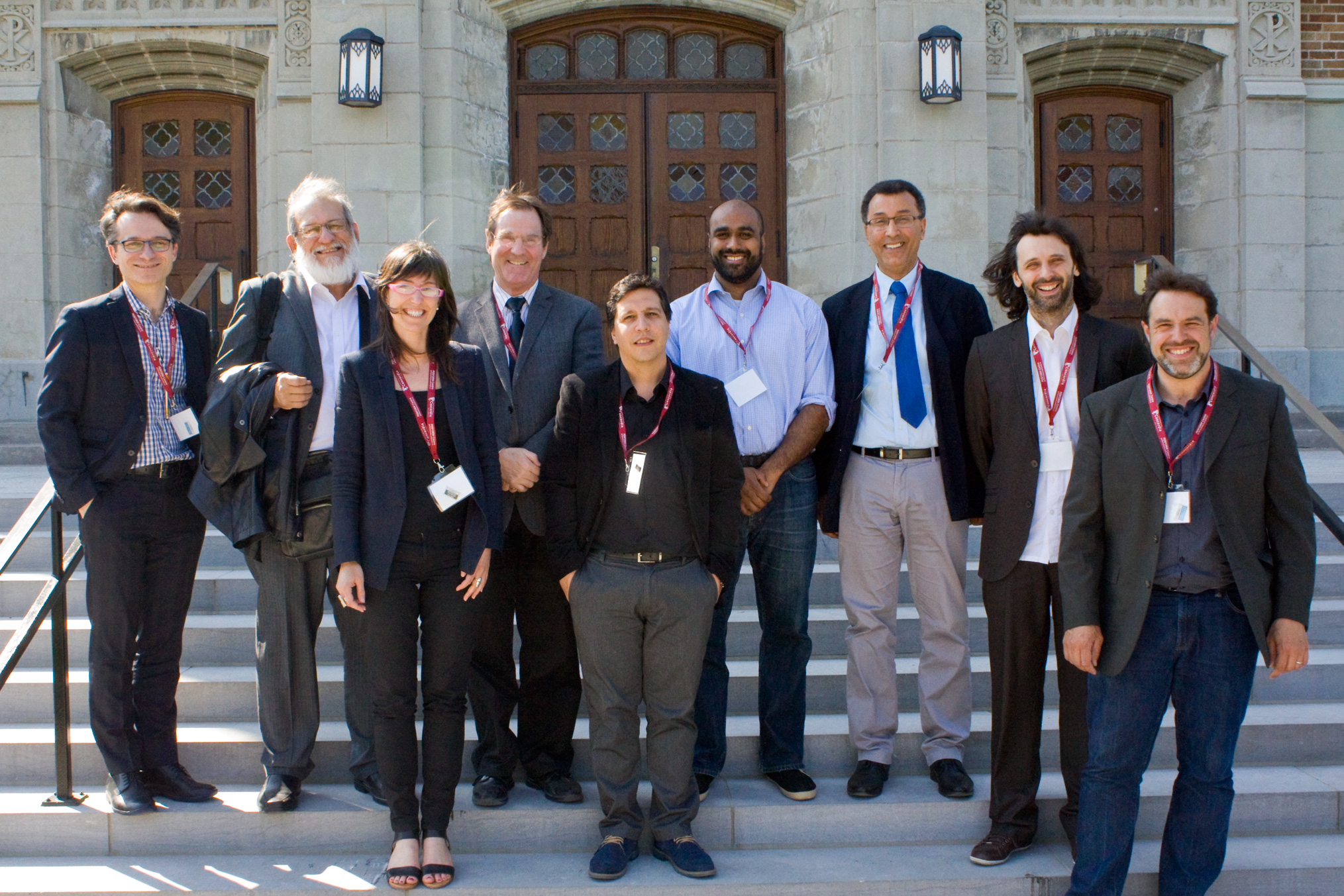
(from left to right)
Louis Bherer, Pedro Antonio Valdés-Sosa, Sylvia Villeneuve, Alan C. Evans, Felix Carbonell, Mallar Chakravarty, Habib Benali, Pierre Bellec, Christophe Grova
February 2016
- Dr. Villeneuve received funding from the John R. Evans Leaders Fund for infrastructure associated with a Canada Research Chair amounting to $250,000
January 2016
- Dr. Villeneuve received the Canada Research Chair in Early Prevention of Alzheimer’s Disease of $500,000